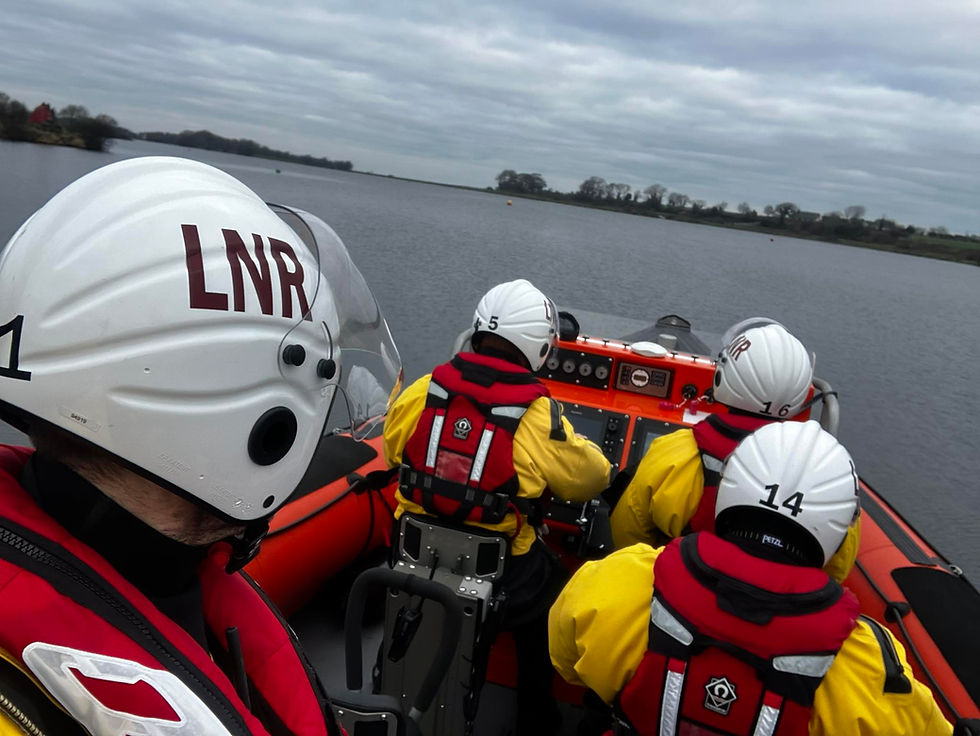
Galway RNLI welcomes first new helm in nine years

Monday 17 August 2026
Galway RNLI has welcomed its first new helm since 2017, with volunteer James Rattigan taking on one of the most senior and demanding roles at the lifeboat station.

James, who joined Galway RNLI as a volunteer in September 2017, has now qualified as a helm and joins the six other helms attached to the station.
The helm is the most senior command position on an inshore lifeboat, with responsibility for the safety of the crew and for everything that happens during a rescue.
For James, the achievement marks the culmination of almost nine years of volunteering, training and study.
“I joined the RNLI as a volunteer in September 2017 initially as shore crew before starting training to become lifeboat crew,” James said.
“Last year I completed the training to become a navigator in preparation for moving on to and qualifying for the role of helm. I’m delighted to take on this senior position and have the opportunity to continue in a lifesaving role while also contributing to the future of the lifeboat station by training the next generation of crew.”
James grew up with a strong connection to the water, taking part in activities including powerboating and sailing. With friends of his family already involved with Galway RNLI, volunteering himself was a natural progression.
“Growing up I spent my time on the water taking part in various water activities like powerboating and sailing,” he said.
“Friends of the family were involved in Galway RNLI so when I was old enough to volunteer myself it seemed like a great way to apply the skills I had learned on the water, to saving lives at sea.”
Progressing from lifeboat crew to helm represents a significant step, bringing with it a much greater level of responsibility.
James said he was encouraged to put himself forward for the role by the Lifeboat Operations Manager and his fellow helms.
“It is a big step up to progress from crew to the command position as helm,” he said. “I wouldn’t have been able to do it without their support in sharing their knowledge, providing training opportunities and putting me through my paces to make sure I was ready for the helm assessment.”
The preparation involved long nights of study as well as building on the practical experience James had gained during his years as lifeboat crew.
“There were some long nights of study and this along with the years of experience I have gained as lifeboat crew has helped me to prepare for whatever situation I might face as a helm when we are called out on a shout,” he said.
“I’d like to acknowledge all of the time commitment that the station management, helms and crew gave to me.”
Galway Lifeboat Station volunteer Lifeboat Training Coordinator Mike Guilfoyle said James’s qualification was the result of a huge collective effort involving the candidate, his fellow crew, assessors and his family.
“They say it takes a village to raise a child, but to become an RNLI helm that takes a dedicated candidate, a fully invested lifeboat station crew, expert assessors, an understanding family and countless hours of preparation and study,” Mike said.
The training required to become a helm covers every aspect of operating an inshore lifeboat, from boat handling and emergency situation management to leadership.
It includes online modules, shore-based training, a course at the RNLI College in Poole, training at sea and extensive study, all undertaken alongside full-time employment and the commitment of remaining available to respond to lifesaving calls.
“The helm is responsible for the safety of the crew on board the lifeboat and for everything that happens during a rescue,” Mike said.
“Not an easy undertaking on top of holding down a full time job and also being on call 24/7 to launch on rescues.”
There is also a long-standing Galway tradition associated with qualifying as a helm. Once James passed his assessment, he was presented with a key to the lifeboat station by RNLI Assessor Trainer Seán Ginnelly.
Seán has spent many hours at Galway during the year training and assessing crew members as they work towards their individual training plans and goals.
The key carries a particular significance.
“By having a key and opening the station, the helms are in command from the time the crew assemble and launch until the lifeboat and crew return, the boat is brought back ashore to be washed down and fuelled up, the post-launch paperwork completed, the crew are safe to go home and the helm can then be the last person to leave and lock up,” Mike explained.
The scale of the training involved is considerable. Mike estimates that a crew member following the same progression as James must study and pass assessments for more than 50 competency modules before reaching the helm stage.
He said James’s dedication made him an ideal candidate for the responsibility.
“It is a massive undertaking which requires someone who is dedicated, enthusiastic and committed to the RNLI’s lifesaving mission and that is the perfect description of James,” Mike said.
“We are incredibly proud of his achievement and the inspiration he is for future crew.”
James’s qualification not only strengthens the current operational team at Galway Lifeboat Station but also marks the beginning of a new chapter in his volunteering career, with the opportunity to pass on the experience and knowledge he has gained to those coming through the ranks behind him.
For a station whose volunteers are prepared to drop everything when the call comes, the addition of a new helm is a significant achievement — and one that reflects years of commitment both on and off the water.